Bastar Gram Sabhas share lessons from successful pilots in collective forest produce sales
Date: October 3, 2026
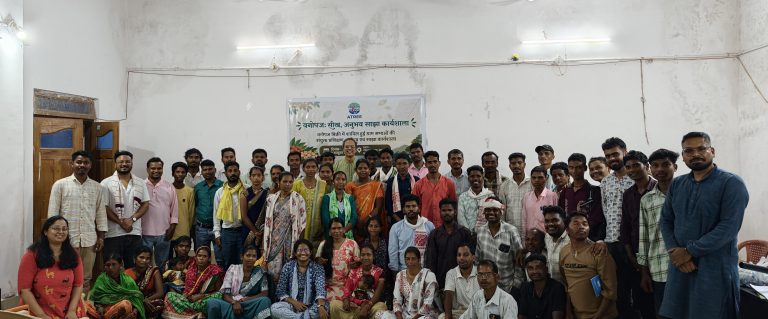
Jagdalpur, 3 October 2026: A workshop on Forest Produce Learning and Experience Sharing was held at Gondwana Bhavan, Jagdalpur, to review community experiences of collecting, storing and collectively selling broken kernel of Sal (Shorea robusta) seeds and sun-dried food-grade mahua (Madhuca longifolia/Madhuca latifolia) flowers. The workshop drew on pilots facilitated by ATREE with support from DCB Bank in 2026 and discussed preparations for the next season.
During the Sal seed pilot, six Gram Sabhas in Darbha block of Bastar district, involving approximately 500–600 households, aggregated around 35,000 kg over three weeks for collective sale to a buyer. They surveyed households to estimate available quantities, recorded transactions, arranged local transport and prepared transit letters and advance and final payment receipts. The buyer transferred payments to Gram Sabha bank accounts for distribution to collectors. The mahua pilot was conducted in Titri and Kondlur Gram Sabha of Bastanar and Darbha block respectively. 27 households collected approximately 1.2 tonnes of dried food grade mahua flowers from 47 trees using nets, raised drying platforms and improved storage practices. Both pilots involved household surveys, collector-level records and direct buyer payments to Gram Sabha accounts. The food grade mahua pilot also included tripartite agreements between the Gram Sabhas, buyer and facilitating organisation.
Anubhav Shori welcomed participants and introduced the workshop’s purpose, while Lakshminath facilitated introductions. Yashashree Garge presented the sal seed experience, including changing regulations and market prices, the need for advance funds, and challenges concerning weighing and transport. The discussion highlighted that collectors’ returns depend on travel expenses, payment timing and weighing arrangements as well as the quoted price per kilogram. Followed by the presentation, each group of Gram Sabha/CFRMC representatives shared their experience of doing the collective sale for the first time and the challenges they experienced and what value do they see in this model of conducting forest produce disposal under the rights conferred by the Forest Rights Act, 2006.
The earlier presenter continued with the mahua session, which included a screening of the film “Mahua re Mahua” made by ATREE’s communications team. Beyond collection and sales figures, the presentation examined changes in nature of physical efforts/labour work, the effort required to maintain food quality and the costs of continuing independently. The highlight was the success of the MoU process as well as the direct payment to Gram Sabha as a fair way to ensure trust building. It allowed for faster adoption despite the hesitation and skepticism the Gram Sabha members had early on. They owned the process simply by training via watching videos and on ground handholding by ATREE Bastar team. Members of ATREE’s Bastar team also shared their experiences of facilitating both pilots. Their learning was primarily in addressing concerns about participation and estimating quantities to support collection, handling, recordkeeping and logistics. During hailstorms and unpredictable rainfall in March and April, the team helped repair net installations, dry wet mahua and separate affected flowers. Their continued presence helped reassure participants as they navigated unfamiliar procedures and weather-related setbacks.
Discussion on continuing these models in future independently called for understanding the capital requirements and hours of work by the committee members as well as the Gram Sabha members which is essentially the entire village community. Several villages in the neighborhood and working with ATREE also expressed interest in initiating this process visited the pilot villages to understand the net installation and drying process. Food grade procedures included nets beneath trees, clean collection baskets, gloves and head coverings, drying on raised net platforms, moisture levels below 10 per cent, and double packing for storage. Despite low production, rain, hailstorms and damage to nets from wind and cattle, the buyer paid an additional quality premium of ₹5 per kg over the initial ₹80, bringing the final price to ₹85 per kg.
Women’s work and participation were a central theme. Women collectors reported that sorting flowers while seated in the shade was more convenient and left more time for other activities. The workshop also addressed participation beyond collection, including weighing, recordkeeping, payments, buyer negotiations and Gram Sabha decisions. Also, the collection process endures long hours of walking in the Sun and bending and guarding the flowers which was addressed to an extent by this new process, which removed the time-boundedness of the process of mahua collection. The group activity deep dived into a SWOT analysis conducted by each Gram Sabha representative group reflecting deeply on their experience and expectations.
Group discussions considered what worked, what was difficult, whether to continue or modify the pilots, and whether dedicated forest produce groups were needed within Gram Sabhas. Participants also discussed a sal leaf plate pilot and possibilities for collective marketing of other forest produce. Priorities included village-specific cost and payment plans, advance funds, clear buyer agreements and women’s participation in decision-making. In adopting a new model the issues of trust, need of early partial payments, storage at the village level, as well as weight differences in paili and kilogram. A lot of the existing issues were mitigated through the pilot such as long travel time and payment, trusted fair pricing and payment transparency ensured by Gram Sabha committee members.
Participants also tasted products made from these forest resources: chocolate with a high sal fat content and ladoos prepared by Kawapal self-help group members using food grade mahua from Titri. This offered a direct experience of how the produce they collected could be used in finished foods. In the concluding session, Sharad Lele synthesized the discussions and emphasized the broader purpose of the pilots: beyond financial returns, they aim to strengthen Gram Sabhas’ collective capacity to manage their forests through transparent, resilient and inclusive practices.